Build a pet supply store.
Learn the math.
A 10-session hands-on Math Lab where teams of students design and run the departments of PRISM Pet Supply — and discover area, perimeter, and multiplication along the way.

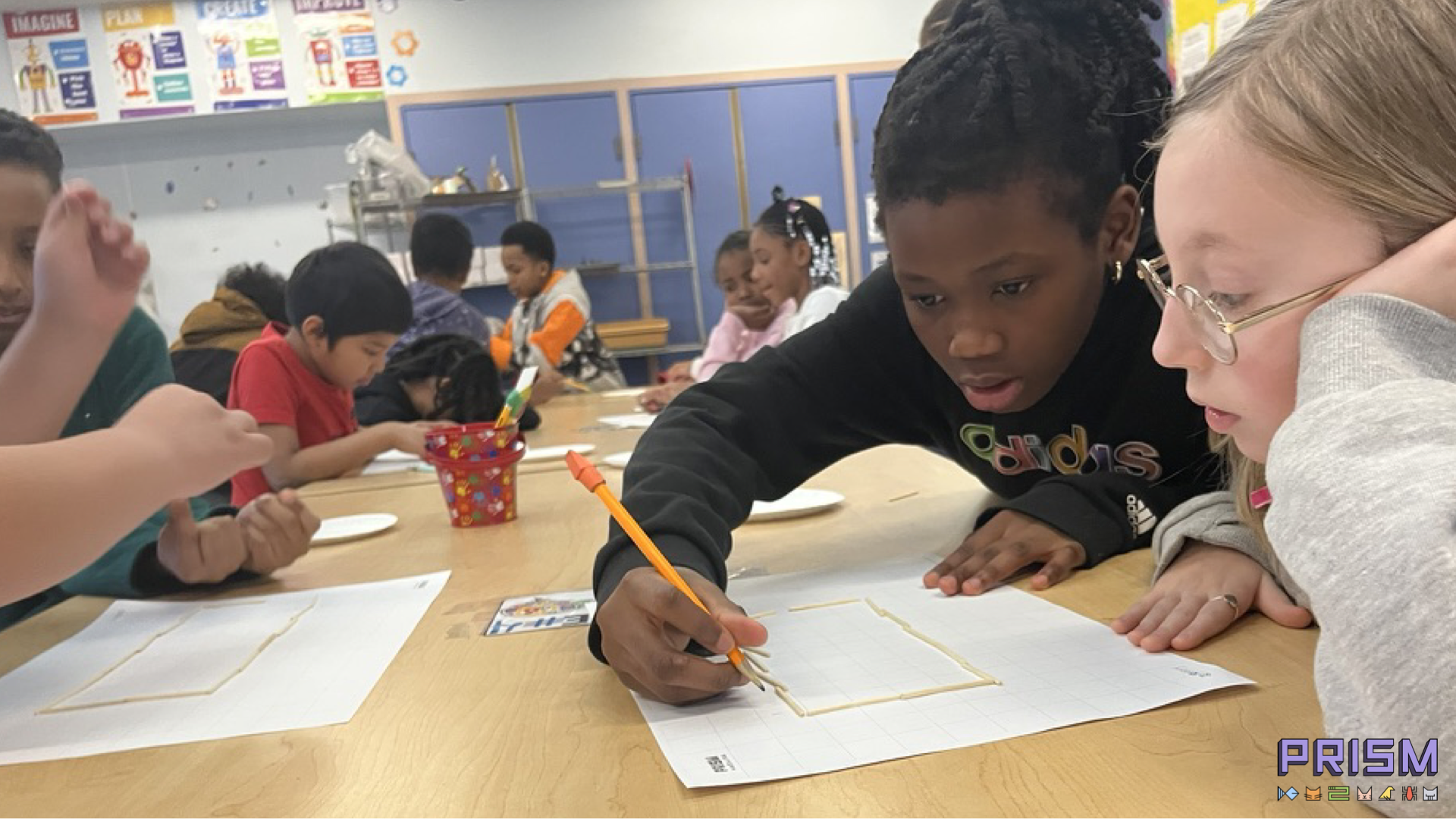
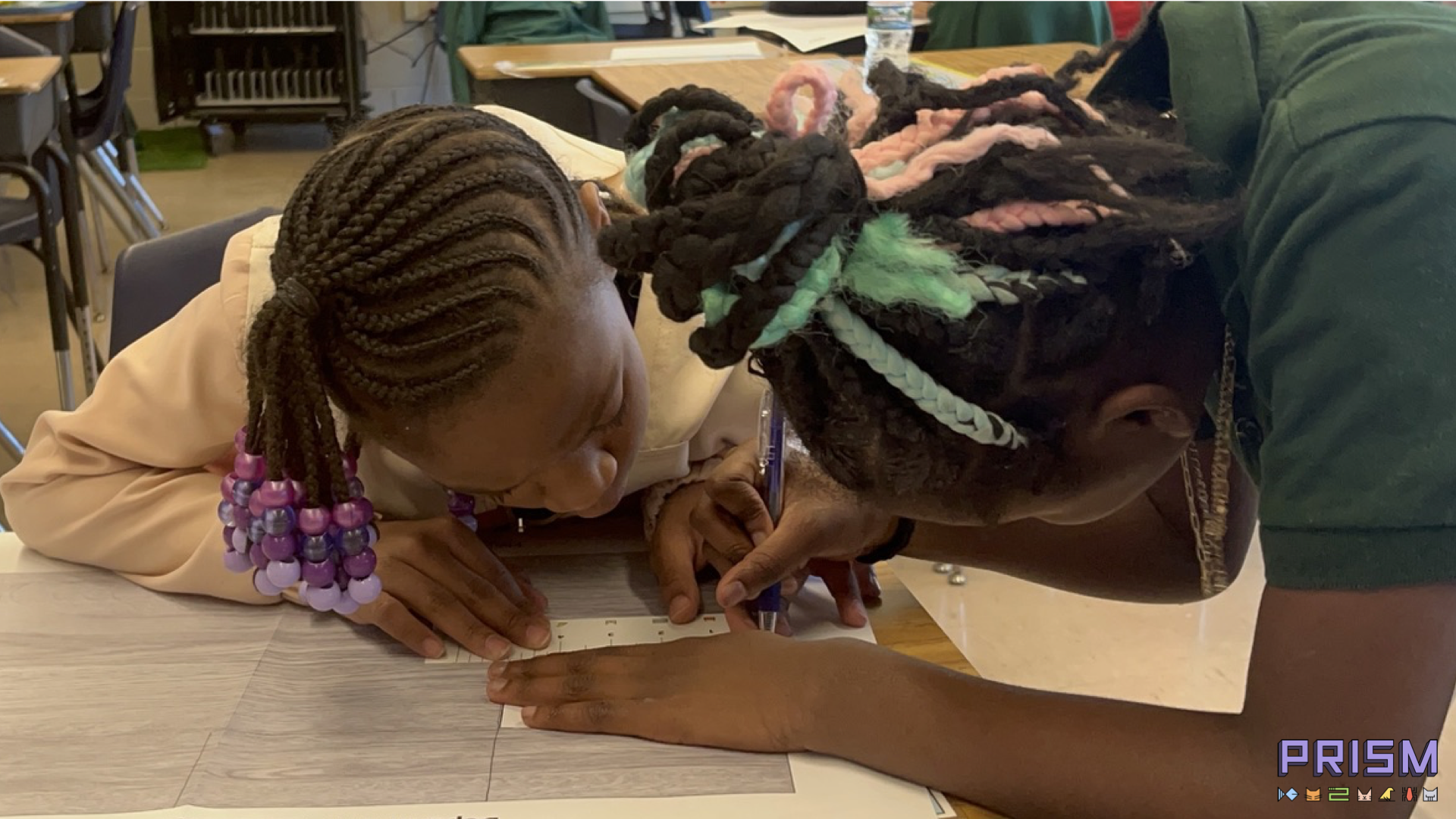
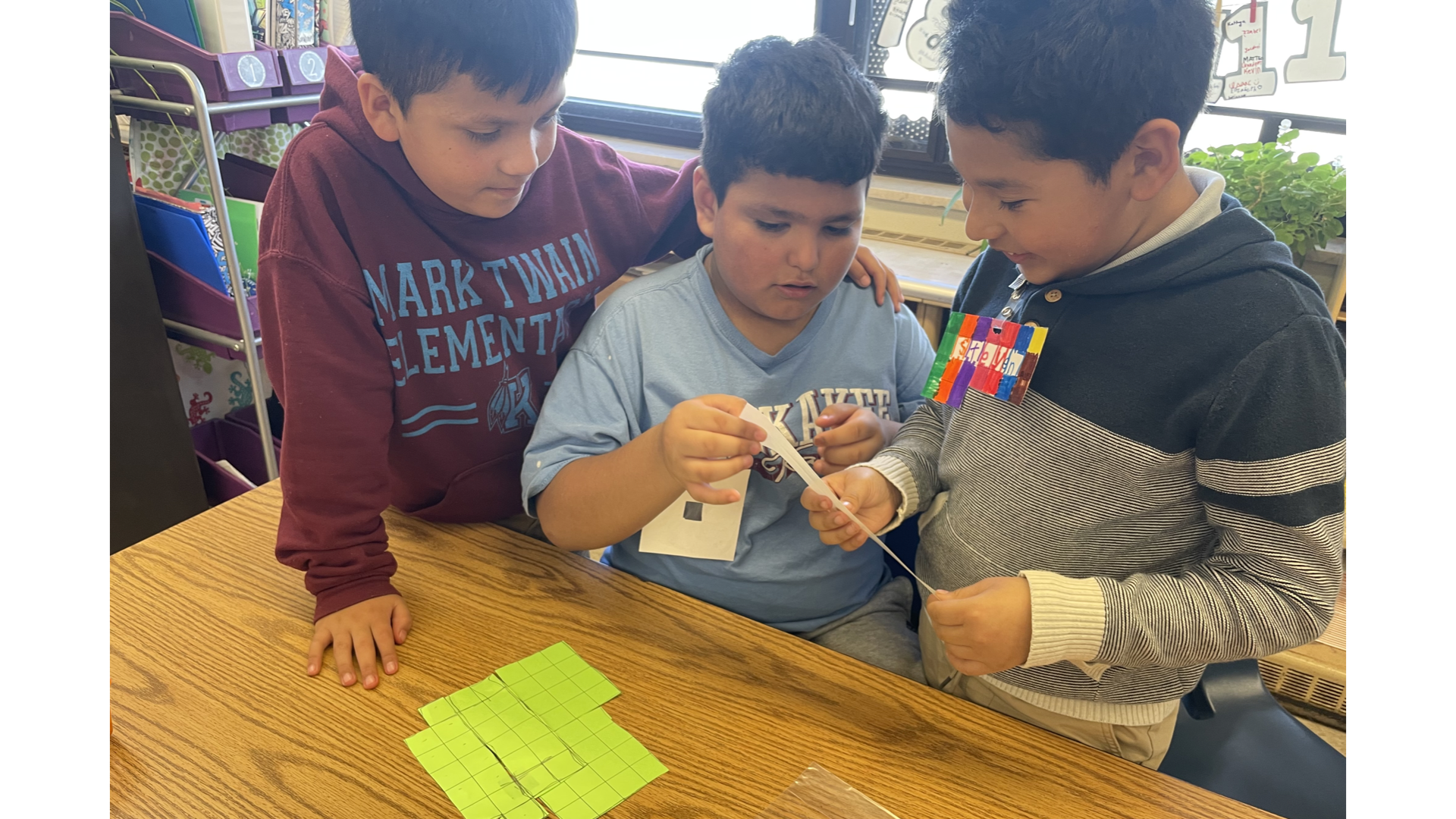
PRISM: Grand Opening is a 10-session Math Lab — 15–20 hours of instruction where teams of four students design and build departments of a pet supply store. Students tile grid sheets with wood blocks to find area, measure lengths with custom PRISM rulers, lay out parking lots and pet play zones on oversized Petville maps (11×17), construct display tables, and design store signs — all with physical materials they handle, arrange, and measure themselves.
Students start by tiling surfaces and counting unit squares to build a concrete sense of area. They measure side lengths with rulers, connect those measurements to multiplication, and begin computing area and perimeter from dimensions rather than counting. By the later sessions, they're combining area and perimeter reasoning to solve multi-step design problems — choosing materials, checking that departments fit the floor plan, calculating costs.
"The kids would constantly ask us, 'Are we going to do PRISM today?'"
— 3rd grade teacherHow the curriculum works
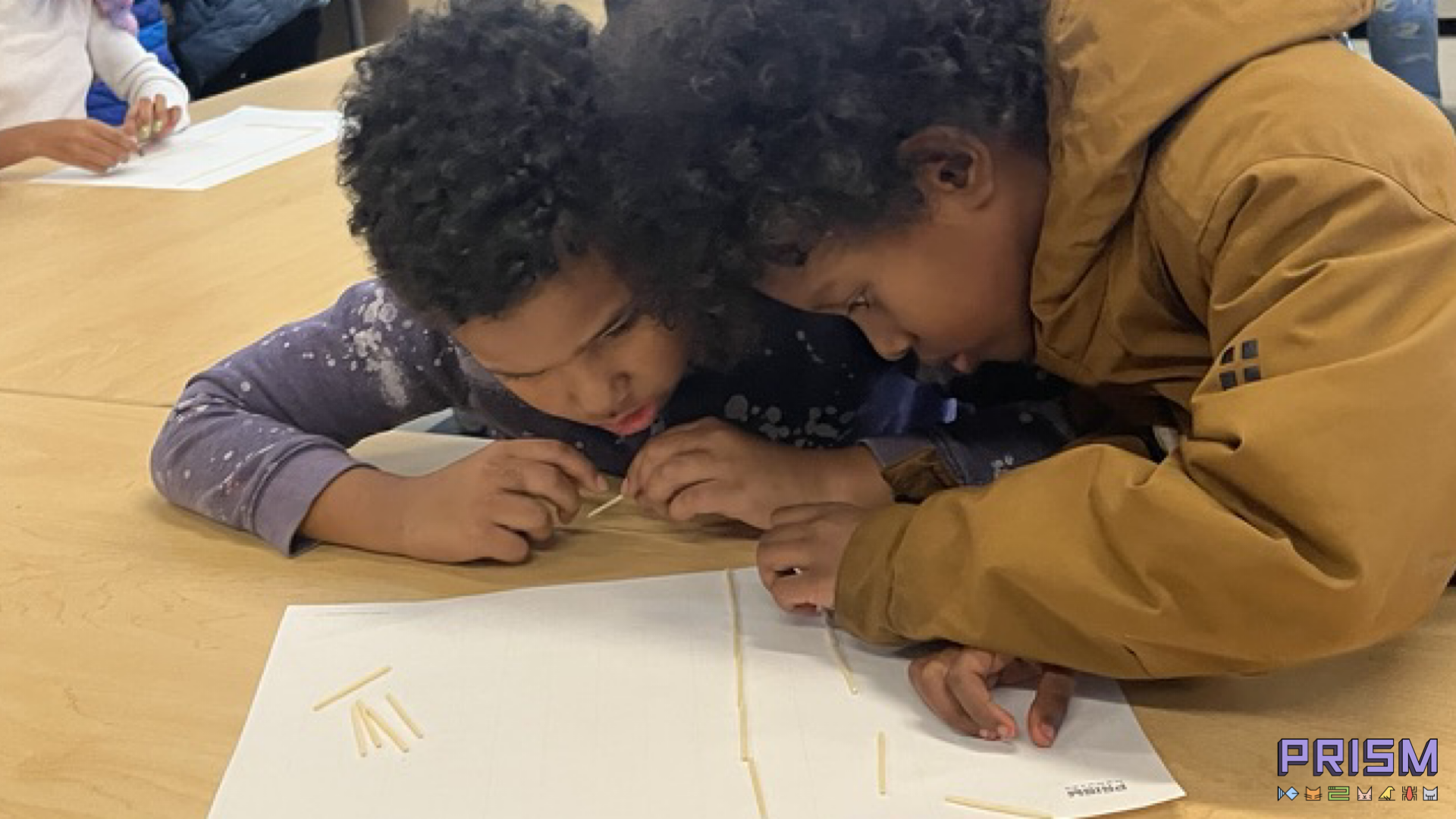
The project runs as a single sustained narrative. Diego Gatos — the CEO of PRISM Pet Supply — hires each team to run a different department of his store. Across 10 sessions, students move from tiling and counting to multi-step area, perimeter, and multiplication problems — all embedded in the work of building out their department.
- Sessions 1–2: Make employee ID cards, draft a floor plan by tiling grid paper with wood blocks, and choose a store location by measuring distances on the Petville map and reading scaled bar graphs.
- Sessions 3–4: Design pet play zones and a parking lot — placing blocks to create rectangular areas, then measuring perimeter by running rulers around the edges.
- Sessions 5–6: Stock shelves by arranging items into arrays on grid sheets and build display tables by combining objects into larger arrays — both structured around multiplication as repeated groups.
- Session 7: Build an aquarium castle, adding, subtracting, and multiplying to calculate material quantities.
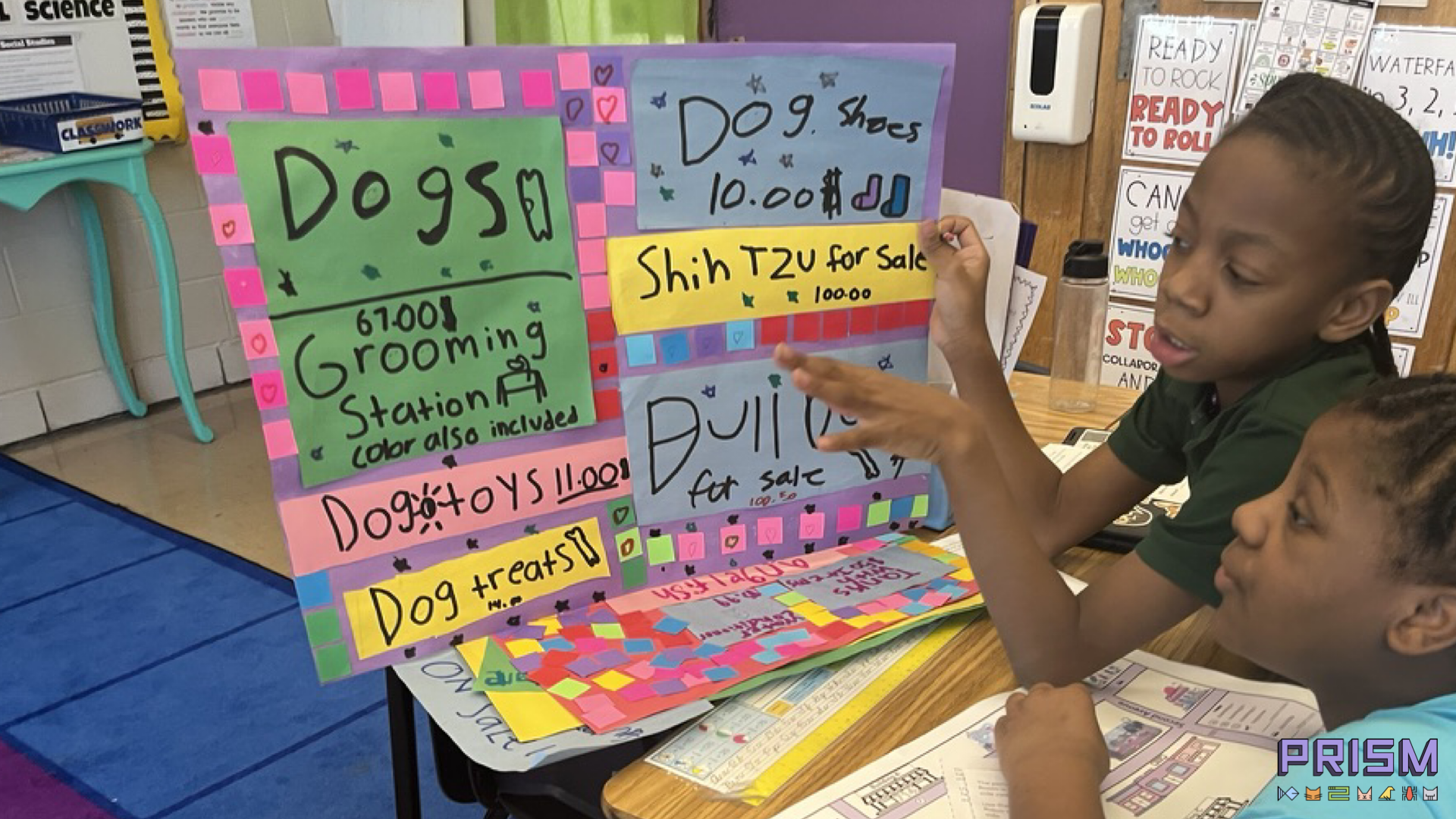
- Session 8: Design store signs, applying area and perimeter together.
- Session 9: Write and perform a commercial with embedded computation.
- Session 10: Capstone — find the missing MATHKINS™ dogs using perimeter, area, and multiplication to decode clues.
10 sessions at a glance
Click any session to view its teaching slides.
Three sample lessons
Who it's for
- 3rd grade teachers looking for supplemental curriculum in measurement and area.
- 4th–5th grade teachers who need review and enrichment.
- Afterschool and summer program directors who want structured STEM programming.
- Curriculum coordinators looking for standards-aligned supplements that work alongside any core curriculum — no adoption process required.
What's in the kit
All materials are physical. Materials are consumable — students keep what they make.
- Oversized Petville maps (11×17)
- Wood blocks (½″ and ¾″)
- Custom PRISM rulers
- Department grid sheets
- Blueprint and shelf posters
- Name cards, stickers, construction paper, glue sticks
- Chenille stems, dice, tongue depressors, clear labels
- MATHKINS™ stuffed dogs
- Quick reference booklet
How it runs in the classroom
Every session runs through a web-based slide portal. Diego Gatos — the CEO of PRISM Pet Supply — introduces each assignment: what the department needs to build and why it matters to the store. Short visual mini-lessons teach the math students need to do the work, narrated by veteran math educator Howie Templer. Diego sets the mission. Howie teaches the math. The slides run the session. Open the kit, follow the slides, and go.
Sessions run between 45 and 90 minutes, with some extending longer at your discretion. The curriculum works as a daily block (3–4 weeks), a twice-weekly enrichment (5–10 weeks), or an afterschool/summer program. It supplements any core curriculum — students learn measurement and area concepts through their regular instruction, and PRISM is where they apply those concepts with physical materials and collaborative problem-solving.
Standards by session
PRISM: Grand Opening covers measurement, area, perimeter, and multiplication standards in the grade 3 scope and sequence — with review and enrichment value for grades 4–5. It doesn't replace your core instruction on these topics. It gives students a place to apply what you're already teaching, using physical materials and collaborative problem-solving.
| # | What students do | Standards |
|---|---|---|
| 1 | ID cards & floor plan — area by tiling; area as additive | 3.MD.5, 3.MD.7 |
| 2 | Choosing a location — measure length; scaled bar graph | 2.MD.A.1, 3.MD.B.3 |
| 3 | Pet play zones — concrete models for area; products | 3.OA.1, 3.MD.5 |
| 4 | Parking lot — perimeter of polygon; models for area | 3.MD.8, 3.MD.7 |
| 5 | Stocking shelves — area models; multiplication; additive | 3.MD.5, 3.MD.7 |
| 6 | Display tables — combine objects in arrays | 3.OA.A.3 |
| 7 | Aquarium castle — add/subtract; multiplication | 3.NBT.2, 3.OA.7 |
| 8 | Store signs — perimeter; area models; multiplication | 3.MD.5–8 |
| 9 | Commercial — add/subtract; multiplication | 3.NBT.2, 3.OA.7 |
| 10 | Missing dogs — perimeter; area; multiplication | 3.MD.5–8 |
Professional development
The teaching portal provides step-by-step guidance for every PRISM session. PD is optional — but teams that take it report stronger first-year implementations.
Workshops focus on teaching practice — structuring hands-on learning, facilitating collaborative problem-solving, and reading the room when teams get stuck. Led by a nationally recognized math educator, teachers work through a PRISM session as learners — tiling grid sheets with wood blocks to find area, measuring perimeter with PRISM rulers, arranging arrays on department grids. Then they unpack the teaching moves with the facilitator: how to structure the teamwork, where students get stuck, what questions to ask, when to step back.
Format & details
- Half-day workshop, up to 30 participants
- $3,495 flat fee
- Led by a nationally recognized math educator
- Teachers experience a full lab session as learners, then unpack the pedagogy
- Fundable through Title II-A professional development funds
- Available as a follow-up coaching package — request details
Evaluation partnership
Pick the rigor level that fits your context. We provide pre/post instruments aligned to PRISM's standards if you want them; districts can also use their own benchmark assessments. We don't sell the data — your district owns the results and is free to publish.
Option A
Simple pre/post
Administer a brief assessment before and after the Lab, using district benchmark questions or the 10story pre/post instrument.
Option B
Delayed-start RCT
Half of participating classrooms begin first, the other half a few weeks later. Assess all students after the first group completes the project. Use the 10story pre/post or your own instrument.
Option C
Matched comparison
Compare participating classrooms to non-participating classrooms with similar demographics and prior achievement.
Option D
Implementation + perception
Document implementation fidelity, student engagement, and teacher perception alongside quantitative measures.
Kit
Teams are 4 students each. The Grand Opening Kit covers a full classroom — 7 departments, 28 students.
Grand Opening Kit
Full-class kit with materials for all 7 PRISM departments.
- 7 department material packs
- Petville maps, PRISM rulers, tiles, cubes
- MATHKINS™ stuffed dogs (28)
- Teacher access to the slide portal & videos
Year-over-year
PRISM materials are consumable — students take their finished work home (their employee ID cards, their floor plans, their commercials). Each new class needs a fresh kit. Most districts budget PRISM as an annual line item, alongside the workbooks and consumables they already replace each year.
Replacement kits are priced at the same rate. Teacher access to the slide portal does not need to be renewed.
Funding
PRISM is fundable through Title I, Title IV-A, ESSER carryovers (where applicable), 21st Century Community Learning Centers, foundation STEM grants, and PTO/PTA budgets. Quantity discounts are available for multi-classroom orders.